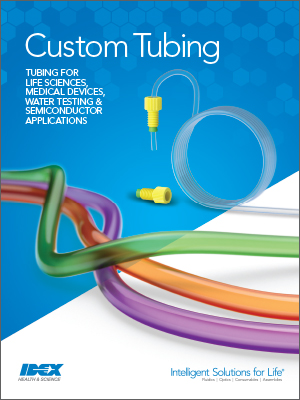


Fluidics

FEP tubing (fluorinated ethylene-propylene tubing) is a great alternative to PFA and PTFE Teflon tubing that exhibits similar properties. FEP tubing is chemically inert to most solvents and biocompatible to meet the highest demands of biopharmaceutical, and laboratory applications and is ideal for low-pressure applications.
IDEX Health & Science FEP tubing is constructed with genuine Teflon™ FEP resin. It’s easy to cut and translucent. We offer many sizes in multiple colors, and our tight manufacturing tolerances ensure product consistency for your fluidics platform.
*Higher operating temperatures will reduce the pressure rating for this tubing.
Contact us today to speak with an expert about your fluidics platform needs. Request a tubing sample here.
Upon submission of this form, you will receive an email from IHSmarketing@idex-hs.com to verify your email address. Please open the email with subject line: "Please confirm your email address" and click "I confirm" to complete the request.

Chemically inert to most solvents, easy to cut, and translucent for easy monitoring of solutions passing through. Find FEP Tubing for your application.
As an experienced extrusion partner for chemically resistant, flexible FEP tubing, IDEX Health & Science helps customers develop tubing solutions for demanding medical, life science, bioprocessing, analytical instrumentation, and environmental applications. Below are answers to common questions about FEP tubing and partnering with IDEX Health & Science.
FEP tubing (fluorinated ethylene propylene) is a fluoropolymer tubing material made from a copolymer of tetrafluoroethylene (TFE) and hexafluoropropylene (HFP). Available in transparent and colored options, FEP tubing provides excellent optical clarity for fluid visibility and easy identification.
Originally developed as an alternative to PTFE and silicone tubing, FEP tubing is chemically inert, offers low absorption and low protein binding characteristics, and does not impact pH levels. These properties help it meet the stringent biocompatibility requirements of life sciences, medical, bioprocessing, analytical, and environmental applications.
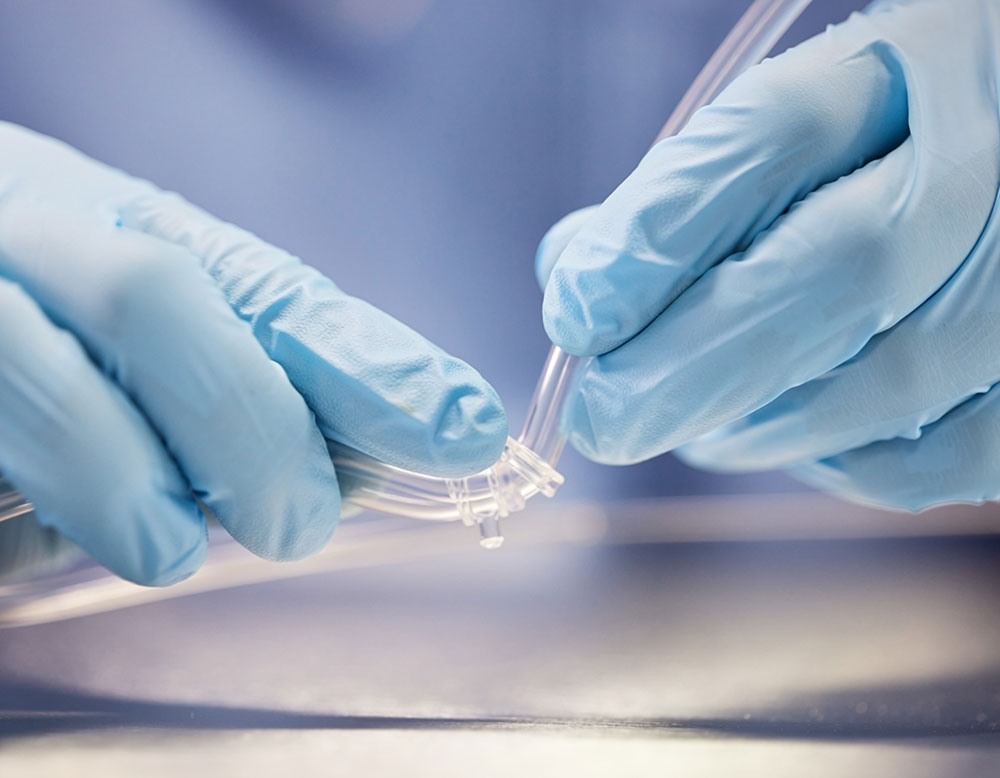
FEP tubing is commonly used for:
FEP tubing's low absorption and chemical resistance help minimize fluid loss while reducing risks to sensitive biologics used in pharmaceutical manufacturing and development.
FEP tubing is frequently used in:
Its broad chemical compatibility helps support analytical accuracy. FEP tubing is one of the best choices for high-performance chromatography systems, particularly for solvent and sample line applications.
Applications include:
FEP tubing supports:
Its low interaction with fluids, ultra-pure surface, and low protein binding characteristics help maintain fluid integrity throughout processing.
FEP tubing is commonly used in:
Its optical clarity allows users to visually monitor flow while maintaining excellent chemical resistance.
FEP tubing is often considered the melt-processable version of PTFE (Teflon™) tubing. While it shares many of the same chemical resistance properties, FEP has a lower maximum operating temperature of approximately 200°C.
A primary advantage of FEP tubing is its ability to be more easily cut, formed, and fabricated while maintaining excellent chemical compatibility.
FEP tubing is often selected over PFA tubing because of its:
FEP is especially preferred in laboratory, medical, and environmental applications where visual confirmation of fluid flow is important.
Compared to silicone tubing, FEP offers:
Its transparency and chemical durability make it an excellent choice for medical, bioprocessing, and environmental applications.
Yes. FEP tubing can be easily cut and formed. Its flexibility, combined with compatibility with push-to-connect fittings, makes installation straightforward across a wide range of fluidic systems.
FEP tubing is capable of continuous working pressures up to 3,000 psi (approximately 207 bar) depending on the tubing OD/ID combination.
Please note: Pressure ratings are based on testing with water at room temperature. Actual pressure limits will vary based on fluid type, temperature, connection method, and operating conditions.
FEP tubing can be used in applications up to 50°C, depending on connection parameters. Higher operating temperatures will reduce the tubing's pressure rating.
IDEX Health & Science offers:
These tight tolerances help support consistent performance in demanding analytical, medical, and fluid management applications.

Yes. FEP tubing is highly compatible with both autoclave and ethylene oxide (EtO) sterilization methods.
Its heat resistance allows it to withstand repeated autoclave cycles without significant degradation, while its non-porous surface resists moisture absorption. FEP's chemical inertness also helps maintain material integrity during repeated EtO sterilization cycles without significantly affecting tubing clarity or performance.
Yes. FEP tubing is highly compatible with both autoclave and ethylene oxide (EtO) sterilization methods.
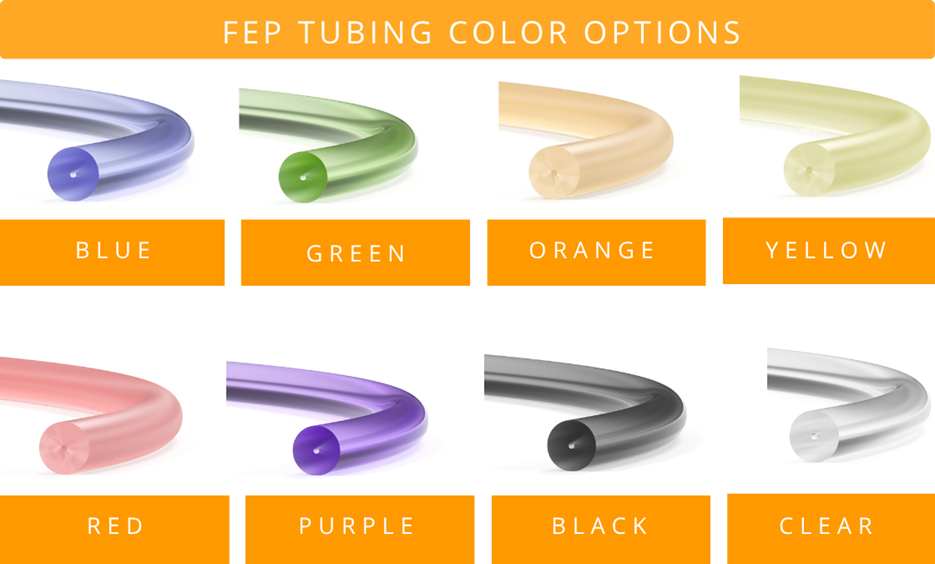
IDEX Health & Science offers FEP tubing in clear and custom color options to support fluid identification, process management, and application-specific requirements. Contact our team to discuss available color configurations and custom extrusion capabilities.
Contact us to explore how FEP tubing can be integrated into your platform.