


Use the left hand navigation to filter resources by Topic and Media Type.
-
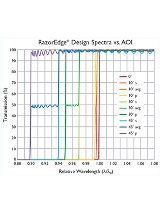
Filter Spectra at Non-normal Angles of Incidence
By IDEX Health & ScienceWhile most applications call for optical filters to be used at normal incidence, it is important to understand how the spectral properties of different types of filters change when using these filters a non-normal angles of incidence (AOI). There are two main effects exhibited by all filter spectrum as the angle is increased from normal which are discussed in this article. Learn More
-
Comprehensive Guide to Check Valves: A Critical Component of HPLC Pumps
By IDEX Health & ScienceCheck valves are critical to HPLC pump performance, as they prevent any backflow and ensure maximum pumping efficiency. Discover critical elements related to the functional performance of a check valve and ultimately the overall chromatography results. Learn More
-
Fluidics Brochure
By IDEX Health & ScienceIDEX Health & Science specializes in directing fluid to where it needs to be, so you can automate your fluidic process in a simple package and form factor. Our team of experts has decades of experience in life science applications to help you avoid pitfalls across a broad range of operations and accelerate your time to market. Learn More
-
Say Hello to the Newly Revised Fittings 101 Guide!
By IDEX Health & ScienceDive into the world of fluidic fittings and chromatography with our newly revised Fittings 101 Guide. Learn the fundamentals of equipment fittings and accessories, as well as some basics about liquid chromatography as an analytical technique. Learn More
-
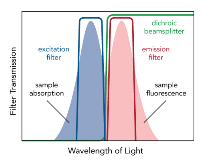
Introduction to Fluorescence Filters
By IDEX Health & ScienceFluorescence occurs when a molecule absorbs light at wavelengths within its absorption band, and then emits light at longer wavelengths within its emission band. For example, brightly fluorescent molecules (called fluorophores) can be attached to biologically significant molecules in e.g. cell membranes, in the brain, or even on subunits of DNA, whose structures become visible in a fluorescence microscope that allows us to track the way cells function in health and disease. Fluorescence is widely used in biology, biotechnology, and medicine, due to its extraordinary sensitivity, high specificity, and simplicity of usage. Learn more about what optical filters are included in a fluorescence instrument and how Semrock optical filters can optimize your application. Learn More
-
Chemical Compatibility
By IDEX Health & ScienceThis Chemical Compatibility section will allow you to either check what materials will work with the chemicals you are using or planning to use; or view what compatibility ratings are given to a material you are planning to use. Learn More
-
Materials Guide
By IDEX Health & ScienceExplore our material properties guide by selecting the material of your choice from the list provided to view properties and solvent compatibility Learn More
-
Laser Damage Threshold
By IDEX Health & ScienceLaser damage to optical filters is strongly dependent on many factors, and thus it is difficult to guarantee the performance of a filter in all possible circumstances. Nevertheless, it is useful to identify a Laser Damage Threshold (LDT) of pulse fluence or intensity below which no damage is likely to occur. Laser damage may be broadly classified into two types: absorption-driven and dielectric-breakdown damage. Which type dominates depends on the material properties (absorption coefficient, specific heat, melting temperature, as well as defects that cause scattering and concentrated electric field effects), geometric properties of the sample (thickness, homogeneity, surface morphology, etc.), and of course the properties of the laser beam itself. Learn More

-
How to Calculate Luminosity Dominant Wavelength and Excitation Purity
By IDEX Health & ScienceIn this article we briefly describe the method to calculate the three main parameters that fully specify color in this system: luminosity, dominant wavelength, and excitation purity. Learn More

-
Leica Cube Assembly Quick How-To Guide
By IDEX Health & ScienceExplore our step by step guide to add a Semrock optical filter set to Leica DM-K, DM-R and DM-IRB cubes. Learn More