Why Fittings Leak Guide—Common Causes, Signs, and How to Check and Fix Leaks
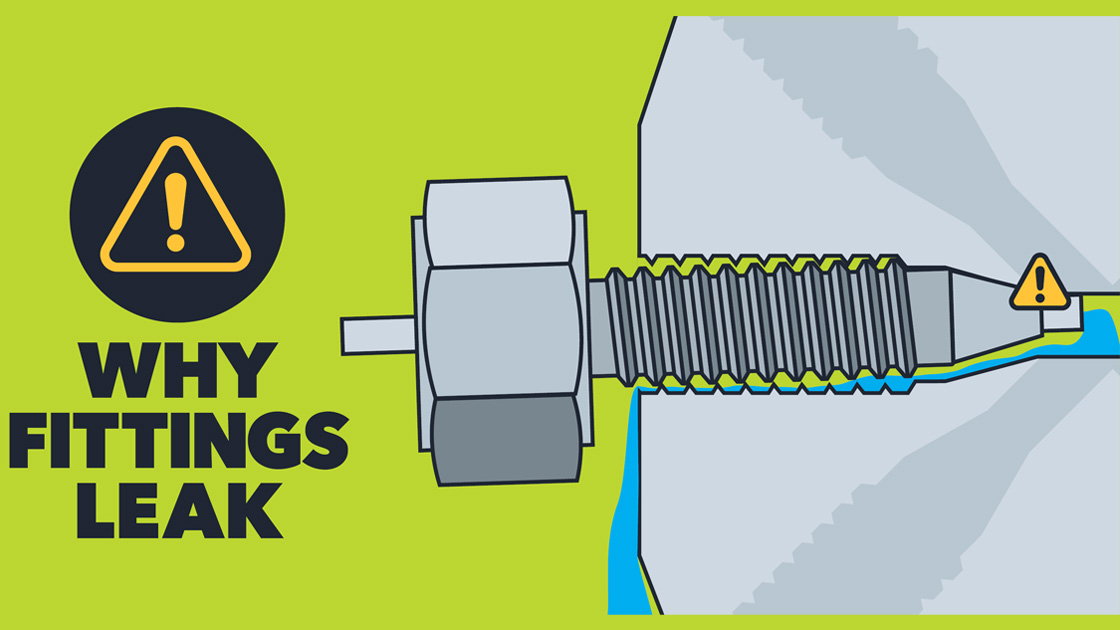
One of the most commonly encountered problems with fittings in a life science platform is a chemical leak, and no one wants leaks in their flow path. Leaks can cause bubbles, low pressure, or no pressure, and loss of fluid. All of these things can compromise your flow path and results.
Common Causes for Fittings that are Leaking:
1. Improper Assembly of Fittings
When a leak occurs, a good first step is to make sure the fitting has been tightened properly and installed correctly. Improper assembly is the most common cause for leaks and can include:
- Incorrect torque: Under-tightening, resulting in insufficient sealing force; over-tightening, resulting in deformed ferrules, damaged threads, or cracked fittings.
- Improper Assembly:Tubing not cut correctly, or not fully seated; Angled installation, causing uneven compression of o-rings or ferrules.
- Reuse of single-use components: Some fittings are designed for one-time use, and reinstalling them can cause leaks. Additionally, leaks and dead volume can occur when the fitting is not used in the correct port.
View our Tech Tip #9 on How to Properly Install Fittings
2. Fittings Design is Mismatched for the Application
Not all fittings work with every life science application. Many applications have specific requirements, such as flow cytometry. Some applications have low-pressure versus high-pressure needs, while others have ultra-high pressure needs where fingertight connections, zero dead volume, and a torque-limiting mechanism are key. The wrong fitting type can also result in poor performance, even if the fittings do not leak.
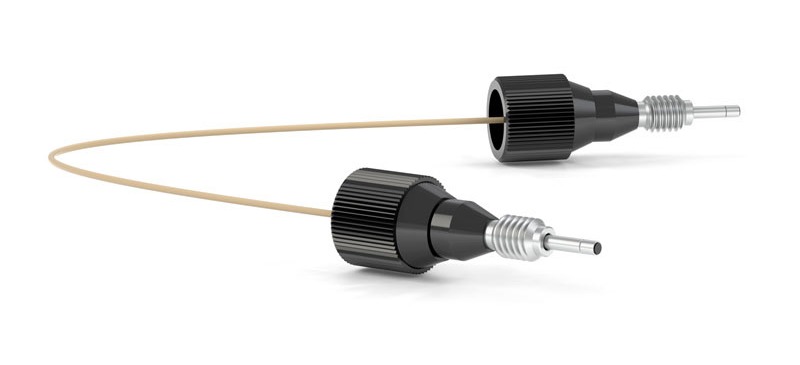
MarvelXACT features torque-limiting technology to prevent leaks and is ideal for UHPLC applications.
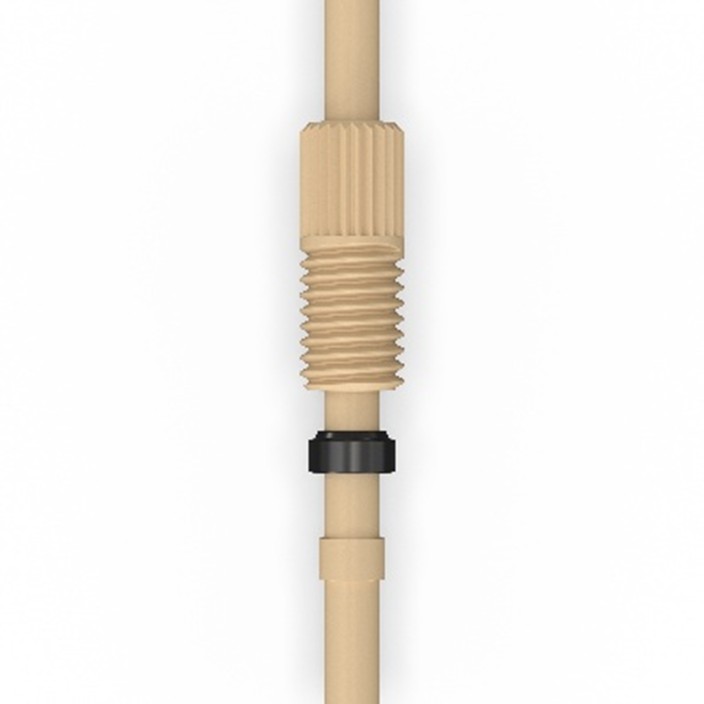
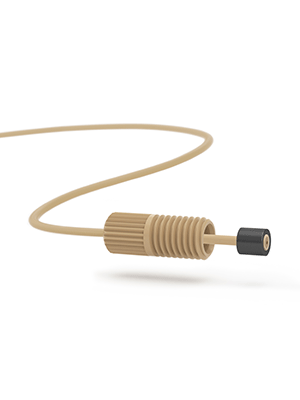
BioTight—a press-fit ferrule fitting that is ideal for low pressure applications.
3. Chemical Compatibility Issues
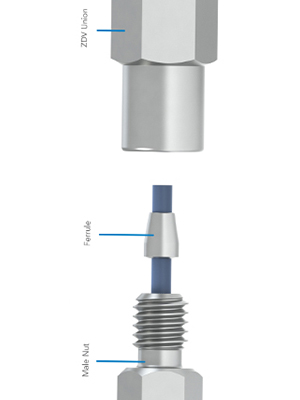
If incompatible chemicals contact a fitting, the ability to seal and thread integrity may be compromised. Since most fittings comprise two pieces — the nut and the ferrule — you should consider chemical compatibility with both the nut and the ferrule.
Incompatible materials cause polymer creep and relaxation, which can deform fittings and loosen seals over continued use. Material incompatibility can also crack, harden, or swell o-rings—causing leaks in your system.

Our Materials Guide provides the information you need to select materials that confidently meet your application’s demands.
4. Manufacturing Tolerances and Surface Finishing
Inconsistent tubing OD/ID—especially with flexible tubing—can lead to uneven compression seals and create leaks. Poor surface finish on ports or ports with defects—such as micro-scratches—also creates leaks.
It’s important to choose a manufacturer who is not only ISO 9001 certified, but also offers precision extrusion and tight tolerances of fittings and tubing. IDEX Health & Science can design and manufacture to your exact specs and application with the precision, integrity, and consistency your system demands.
View our Connections Capabilities
Signs Your Fittings are Leaking
Before you see the first drip in the mobile phase, your system can warn you that a problem may exist. The most common signs of system leaks are:
- No flow or pressure
- Pump pressures up, but there is no flow
- Noisy baseline
- Baseline drift
- Visible signs of fluid
While all of these symptoms could also indicate problems unrelated to leaking connections, it is always easiest to start with the fitting.
Check and Fix Leaks Caused by Fittings
- Check to make sure your tubing is seated properly. When using universal fingertight fittings, the tubing must bottom out in the receiving port before the nut and ferrule are tightened. If a gentle tug disengages your tubing after the fittings have been tightened, loosen the nut and ferrule and try again.
- The fitting may not be tightened enough. Stainless steel nuts and ferrules require a wrench to tighten them, even after repeated use. Fingertight fittings also require a good tightening torque; however, using tools incorrectly may lead to over-tightening and damage to the fitting. As such, tools should be used with caution on fingertight fittings.
- Check the condition of the sealing area. After repeated use, a fitting’s “sealing area” (at the tip of the fitting or ferrule), will gradually become deformed to the point of being incapable of creating a seal. As such, it is a good idea to keep an extra supply of the fittings you are using so you can replace them quickly and avoid unnecessary downtime.
- Check the receiving port for damage or debris. Sometimes a leaking connection has nothing at all to do with the nut and ferrule, but with the receiving port. Ports that have had stainless steel fittings swaged into them are especially susceptible to damage. Check the receiving port for visible burrs or scratches and replace if necessary.
- Evaluate chemical compatibility and ensure you are using a nut and ferrule that are compatible with each other and with the components of your system. Using fittings made of materials incompatible with your mobile phase is a sure way of creating leaks. View our Materials Guide for chemical compatibility, or use universal fingertight fittings.
View our Tech Tip #3 on How to Fix Leaks
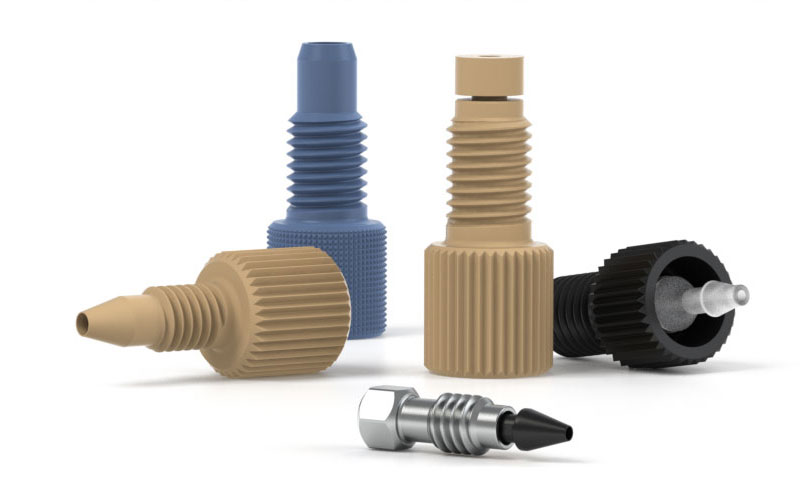
IDEX Health & Science offers a wide selection of fittings, connections, and tubing to meet your system requirements. From high-pressure to low-pressure, we offer various types and materials—all designed to prevent leaks and keep your results flowing.
Eliminate Leak Points from Your Fluidic System
From chemical compatibility challenges to improper fitting selection, small connection issues can have a major impact on system performance. Partner with our fluidics specialists to evaluate your application and recommend proven fitting solutions tailored to your requirements.
*Required Field
Upon submission of this form, you will receive an email from IHSmarketing@idex-hs.com to verify your email address. Please open the email with subject line: "Please confirm your email address" and click "I confirm" to complete the request.