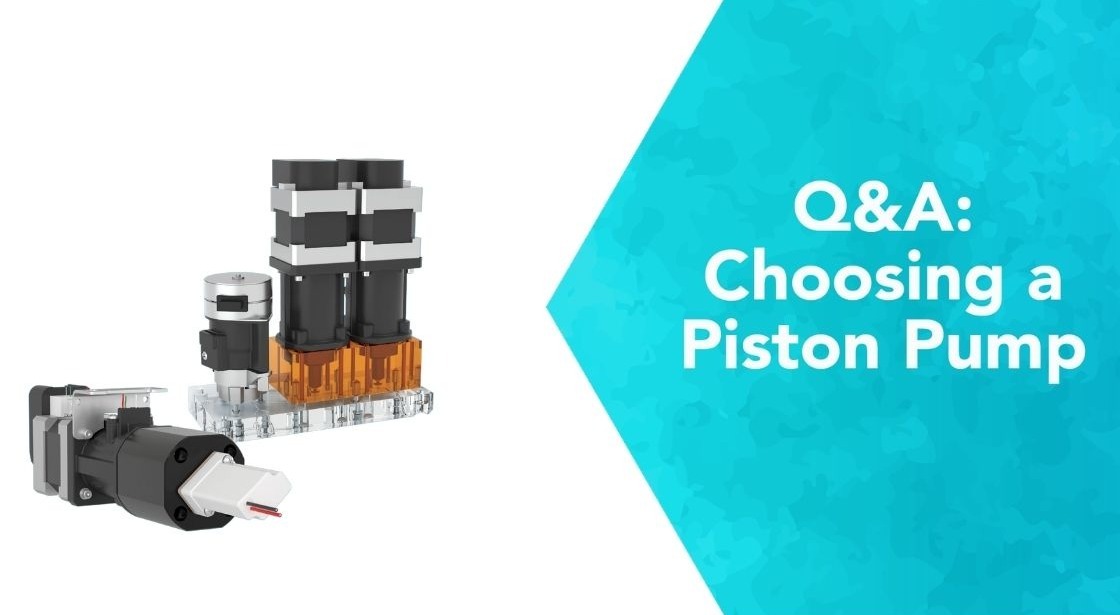
Summary: The right pump for your instrument depends on your reagents, your flow path, and your integration requirements. These questions cover the decisions that matter most in early-stage design.
- Question: I’m running a 1M NaCl solution. Which pump would you recommend?
Answer: For high salt buffers, our Durable Seal pump is recommended, as it is designed to handle saline and detergent-containing fluids reliably while maintaining precision.
- Question: How do I know your pump will work with my reagents?
Answer: We can perform accelerated testing with your specific reagents to ensure performance over the expected life of your instrument. We tailor our testing method to the needs of your application to ensure success.
- Question: How do IDEX Health & Science pumps compensate for backlash?
Answer: Backlash is a mechanical clearance that provides ease of movement in pump components. This freedom reduces friction, minimizing wear and extending pump lifetime. It is important to compensate for backlash in high-precision applications to ensure repeatability and accuracy.
We recommend a 1% move in the opposite direction before executing critical Aspirate or Dispense functions. For example, if a Dispense step is a critical move:
- Aspirate the full pump volume
- Dispense 1% of the pump volume (reverse-direction compensation step)
- Execute the full Dispense of the pump
This method is preferred to mechanical compensation methods, which can add drag, accelerate wear, decrease pressure/flow capability, and introduce noise (as squeaking).
- Question: What consumables are required to run piston pumps?
Answer: Our pumps are designed for life-of-instrument performance, so there are no routine consumables required for normal operation.
- Question: What do I need to integrate your pumps into my design?
Answer: Each pump comes with wire cables so you can plug it directly into your electronics control. Standard port geometries make it straightforward to connect to tubing, manifolds, and valves.
- Question: What type of tubing should I use with the pump?
Answer: Rigid-walled tubing (e.g., FEP, ETFE, PEEK) with super flangeless fittings is highly recommended for connections to and from the pump. This ensures the interior of the tubing will not deform, and precision is maintained.
Once you’ve considered these factors, view our Piston Pump Guide to choose the right pump, comparing available pump solutions based on flow rate, materials, and compatibility. Partner with IDEX
Health & Science to minimize variability and boost instrument performance with custom pump solutions tailored to your fluid design and application.
View Our Piston Pump Solutions Guide
Partner With Us On Your Next Pump Project
View Our Newest Product: Durable Seal Piston Pump
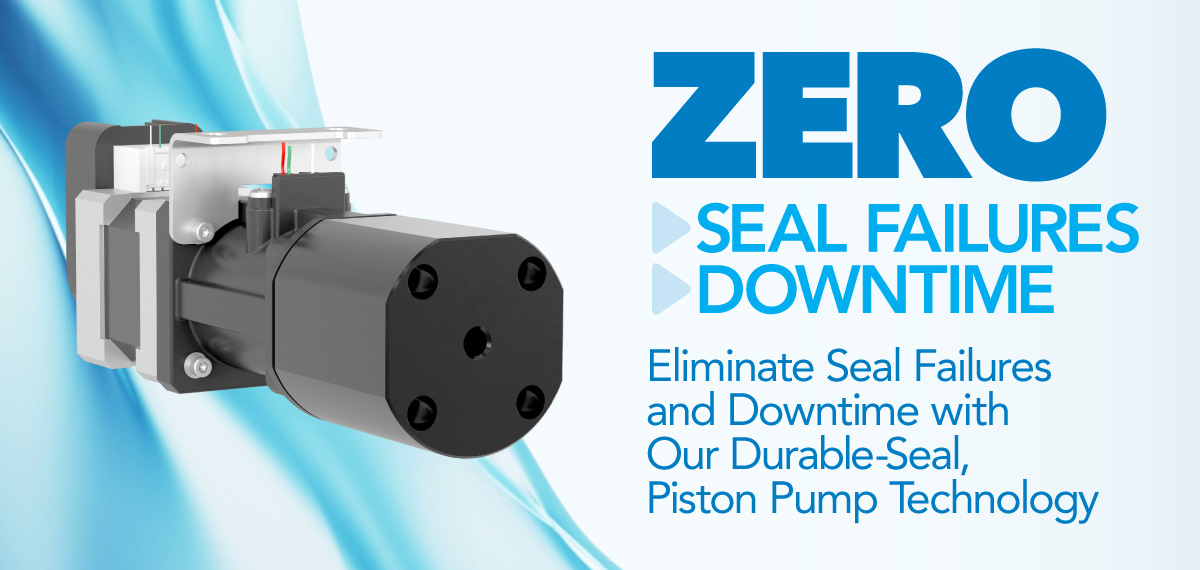
Learn More About New Durable Seal Piston Pump