Stories & Features

Real-time pressure sensing gives you practical insight into how a fluidic system behaves during operation. By using inline pressure sensors at key points in the flow path, you can track changing pressure conditions, detect early signs of blockages, and mitigate risks that could compromise important samples. This kind of visibility supports consistent operation, helps you pinpoint issues before they escalate, and provides a stronger foundation for developing, refining, and maintaining reliable fluidic systems.
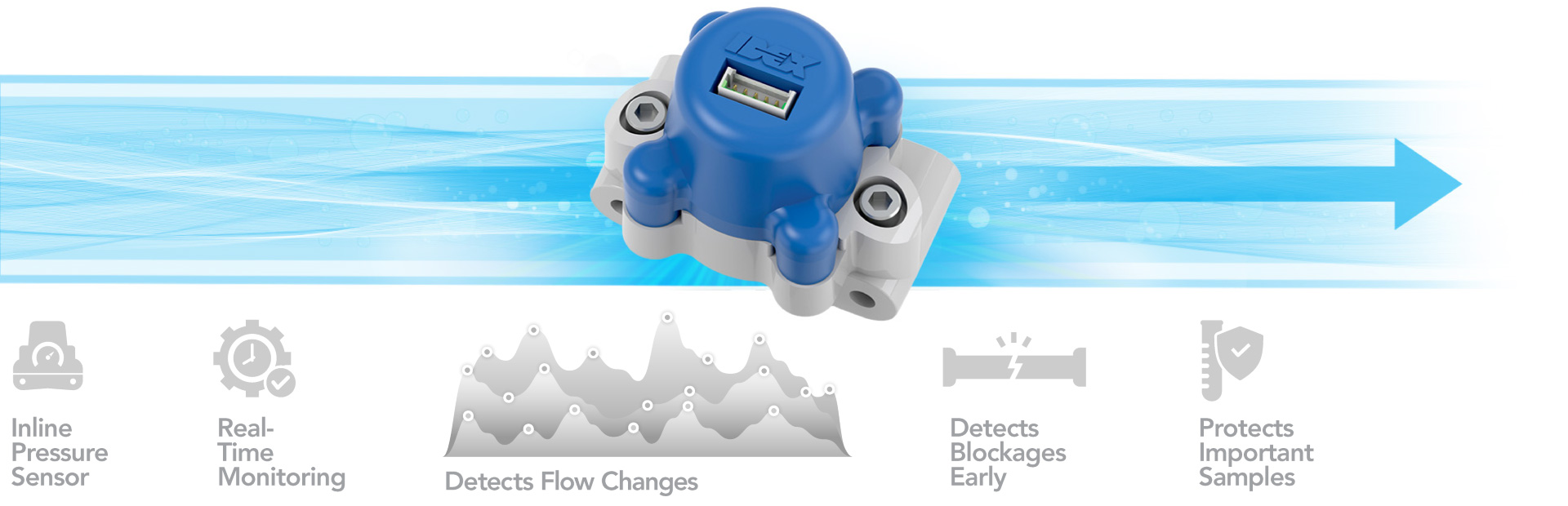
In fluidic systems, pressure is one of the earliest indicators that something in the flow path is changing. Even small shifts can signal developing blockages, flow instability, or conditions that may affect sample integrity or overall system reliability. Real-time pressure monitoring helps you see these changes as they occur, so you can respond more quickly and keep your process running smoothly.
What pressure monitoring can reveal about system behavior:
Real-time visibility makes these changes easier to catch before they interrupt your fluidic system. Instead of discovering issues after pressure has already changed or a sample run has been affected, continuous monitoring gives you immediate feedback about how the system is behaving. This helps you make quicker adjustments, maintain stable operation, and keep your fluidic process on track.
 Talk to an Fluidics Applications Expert about Pressure Sensor Integration
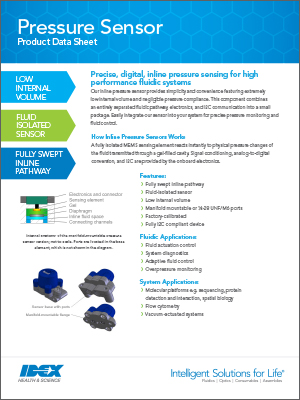
Inline pressure sensors measure pressure changes within a fluidic pathway. A fully isolated Micro-Electro-Mechanical Systems (MEMS) sensing element reacts instantly to physical pressure changes in the fluid transmitted through a gel-filled cavity, allowing pressure to be monitored in real time. Onboard electronics provide signal conditioning, analog-to-digital conversion, and I2C communication, enabling pressure data to be integrated directly into system monitoring and diagnostics.
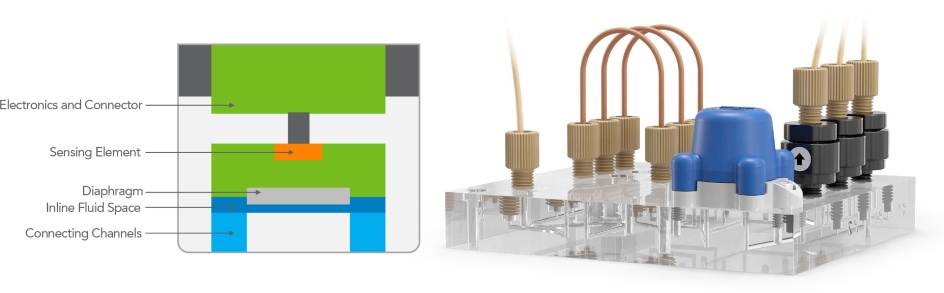
Key elements of the PS200 sensor design include:
Real-time pressure monitoring plays a critical role in maintaining stable, reliable fluidic operation. By providing continuous visibility into pressure conditions during use, inline pressure sensors help systems respond more effectively to change, reduce the risk of disruption, and support consistent performance across a range of operating conditions. The following capabilities highlight how real-time pressure sensing contributes to reliable fluidic operation at the system level.

Fast response time and stable signal (low drift) performance help maintain predictable operation and make it easier to identify pressure shifts early, before they affect your process. The PS200 can also easily communicate with the I2C (Inter-Integrated Circuit).

The sensor’s low internal volume, negligible backpressure, and fully isolated MEMS element enable precise pressure measurement. This makes the PS200 well-suited for sensitive or tightly controlled fluidic pathways.

The sensor is compatible with a range of life science reagents in a small form factor. It is compatible with ¼-28 fittings and manifold-mounted configurations. This flexibility allows it to integrate into a broad range of fluidic designs.
Talk to an Fluidics Applications Expert about Pressure Sensor Integration
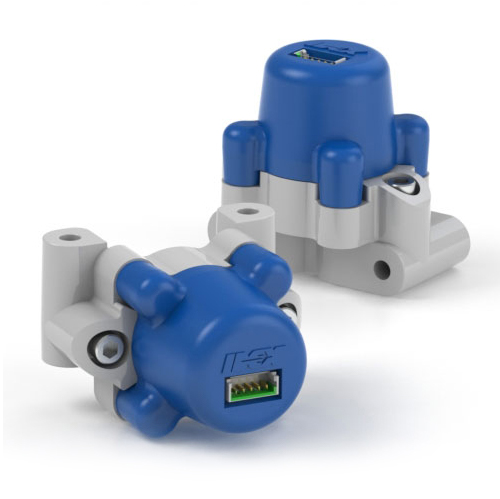
Inline pressure sensors can be incorporated into fluidic systems in different configurations, depending on how you route fluids, where you need visibility, and how your components are arranged. The PS200 supports both stand-alone and manifold-mounted configurations, allowing it to be placed at key points in the flow path without disrupting operation. This flexibility makes it easier to integrate real-time pressure monitoring into a wide range of fluidic designs.
Stand-Alone Sensors
Stand-alone sensors integrate into a fluidic pathway using standard ¼-28 fittings, making it easy to place them at key points in your system. This configuration is ideal when pressure monitoring is required without altering an existing manifold design or when you need more flexibility for sensor placement.
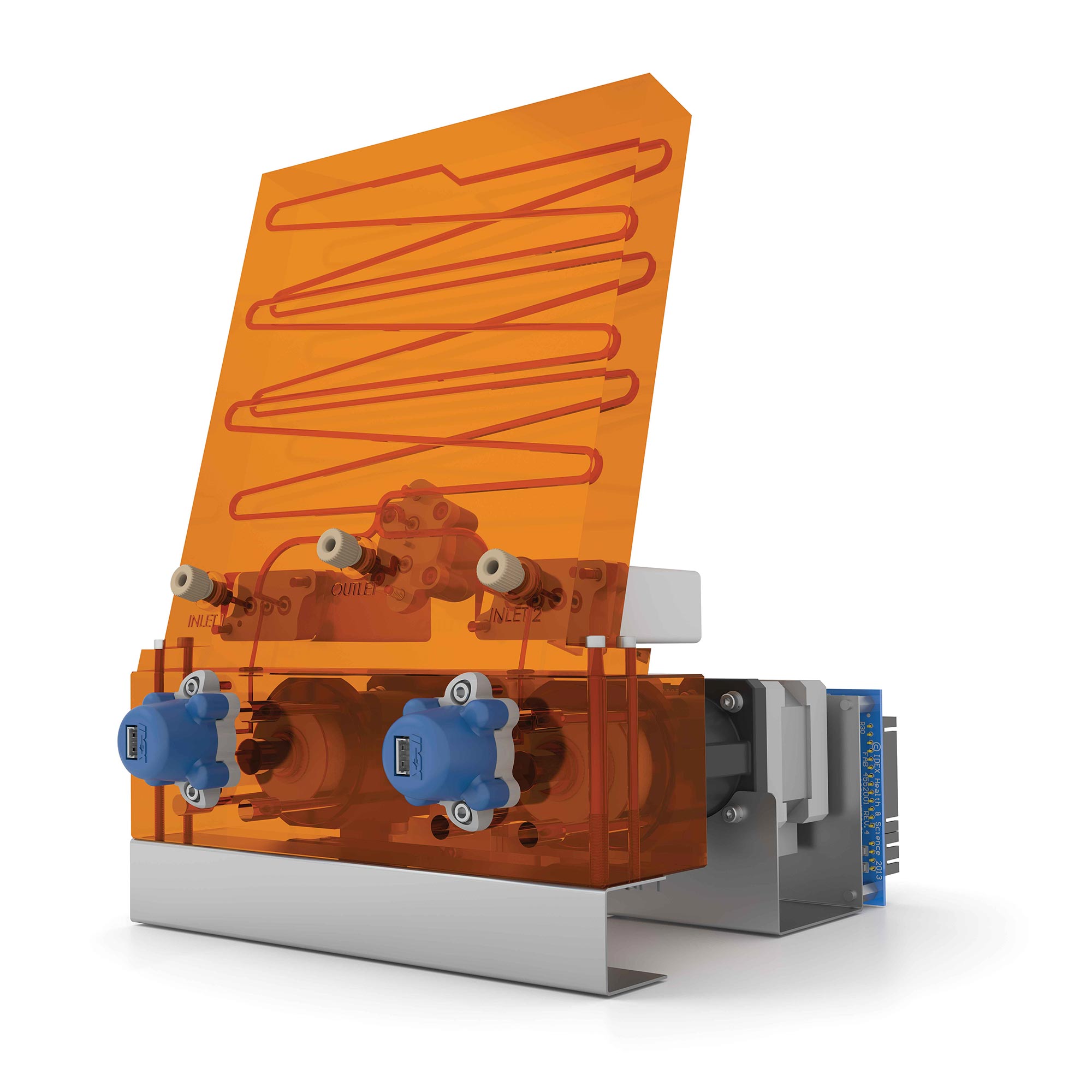
Manifold-Mounted Sensors
For more compact or integrated builds, you can mount a sensor directly onto a manifold. This configuration supports tight space requirements and cleaner routing, and streamlines your fluidic system.
When you’re ready to evaluate how real-time pressure monitoring behaves in your system, our programming software offers a fast way to get hands-on. These tools make it easy to begin measuring pressure in your fluidic system. Each kit includes an integrated USB adapter and QuickStart Software for real-time monitoring, supporting fast setup and testing. Our IDEX Health & Science Library – Powered by Python™ provides an additional way to work with pressure data through a powerful yet easy-to-use sensor programming interface that helps reduce setup time and speed up development.
QuickStart Sensor Software
QuickStart Sensor Software lets you begin viewing real-time pressure data as soon as your sensor is connected. It provides a straightforward interface for monitoring system behavior, evaluating pressure response, and running early fluidic tests without custom programming.

IDEX Health & Science Library Powered by Python™
Get access to our IDEX Health & Science Library, which offers an easy-to-use Python™ interface for working with pressure data. It simplifies communication with sensors (and other components) by handling low-level commands for your system.
If you’re exploring real-time pressure monitoring or evaluating how it fits into your fluidic design, we can help you determine the right configuration and next steps.
Explore QuickStart Sensor Kits Talk to an Expert
These resources provide technical specifications, tutorials, and system-level guidance to support pressure sensor evaluation and help you move from testing to implementation.
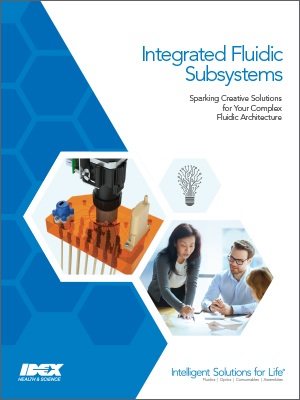
Integrated Fluidic
Subsystems Brochure
Explore how we develop integrated manifold-mounted solutions for fluidic control, sensing, and more for scalable systems.
Quick Start Sensors Tutorial
IDEX Health & Science Library
Inline pressure sensing gives your system clearer diagnostics, more stable operation, and a more predictable development path. With flexible integration options and tools for fast evaluation, you can validate performance early and design fluidic systems that stay reliable under changing conditions. If you’re ready to explore how real-time pressure monitoring fits into your application, our team can help you determine the most effective approach.
Whether you’re assessing early system behavior or planning how to integrate inline pressure sensing into a new design, our team can help you determine the right approach and configuration for your instrument. Access our pressure sensor data sheet.