
Stories & Features

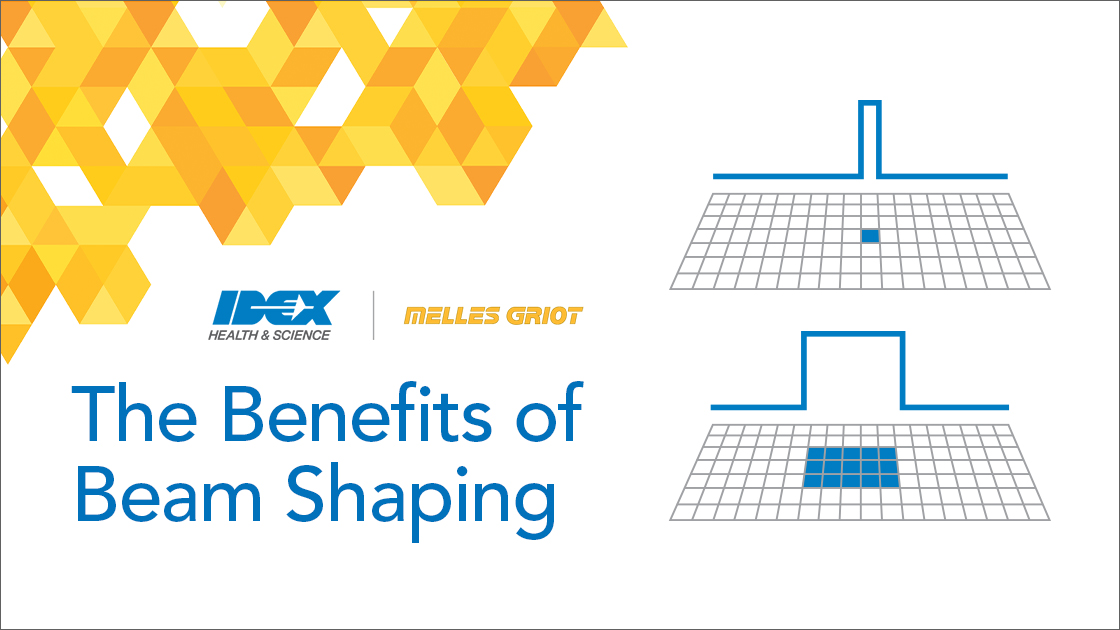
The design of illumination optics for fluorescence-based systems has traditionally been defined by a frustrating compromise: speed versus sensitivity. If you’ve ever had to choose between the high intensity of a pinpoint laser and the rapid scanning speed of a wide-field beam, you’ve experienced the inherent limitations of traditional illumination design.
But what if you didn’t have to choose?
Designing illumination optics involves a delicate balancing act between excitation wavelength, intensity, and the spatial uniformity of the resulting beam.
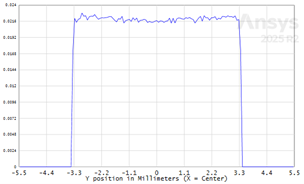 | 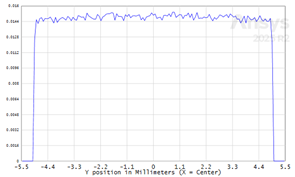 |
Square cross-section (“flat top”) | Rectangle cross-section (“flat-top) |
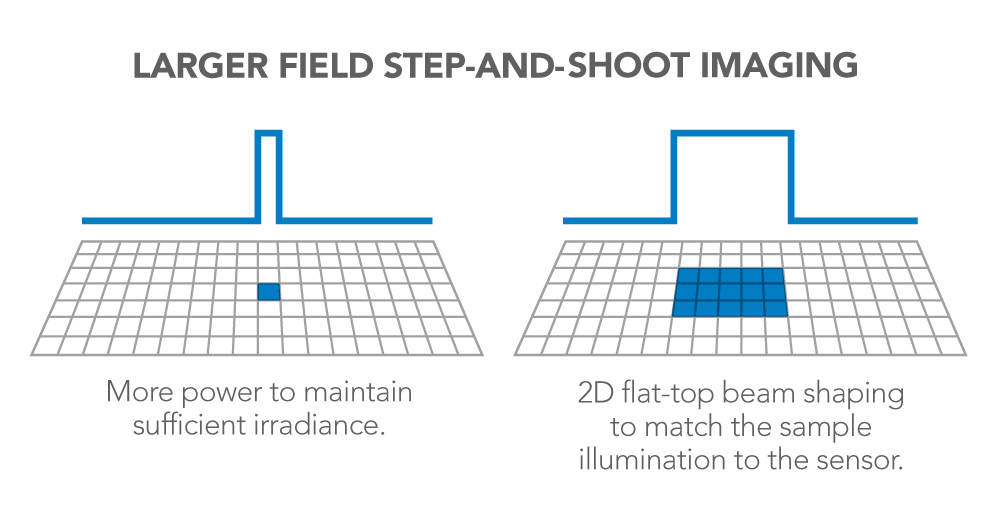
Even if you find a "sweet spot" in beam size, spatial uniformity remains a hurdle. Most light sources are not naturally "flat"; they are typically Gaussian, meaning intensity drops off significantly at the periphery. This creates "dark zones" at the edges of your scan, reducing overall sensitivity and forcing slower scan rates to ensure data integrity.
While beam shaping is the logical answer, implementation for commercial instruments has historically been difficult or expensive.
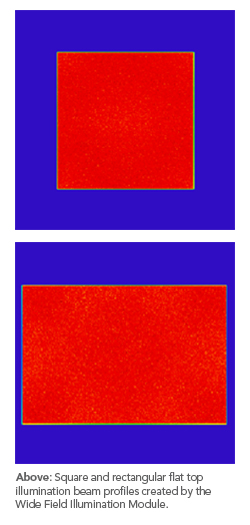 To solve these legacy issues, IDEX Health & Science developed the Widefield Illumination Module. This platform was engineered to be "source agnostic," meaning it can homogenize almost any input profile—whether
it originates from a laser or an LED.
To solve these legacy issues, IDEX Health & Science developed the Widefield Illumination Module. This platform was engineered to be "source agnostic," meaning it can homogenize almost any input profile—whether
it originates from a laser or an LED.
Modern beam shaping is about more than "better light"—it’s about removing the architectural bottlenecks of your system. By eliminating the trade-off between speed and sensitivity, the Widefield Illumination Module enables faster diagnostic results and more robust performance for the next generation of life science instrumentation.
Download our White Paper Request a Design Consultation
Learn how advanced beam-shaping architectures are redefining the limits of fluorescence-based detection and improving data consistency across the entire field of view.